What Matters Most Up Front
Start with the wear setting, not the bottle name. Light Blue succeeds when the goal is a clean signature that stays fresh near other people, and it misses when the goal is sweetness, depth, or all-day projection.
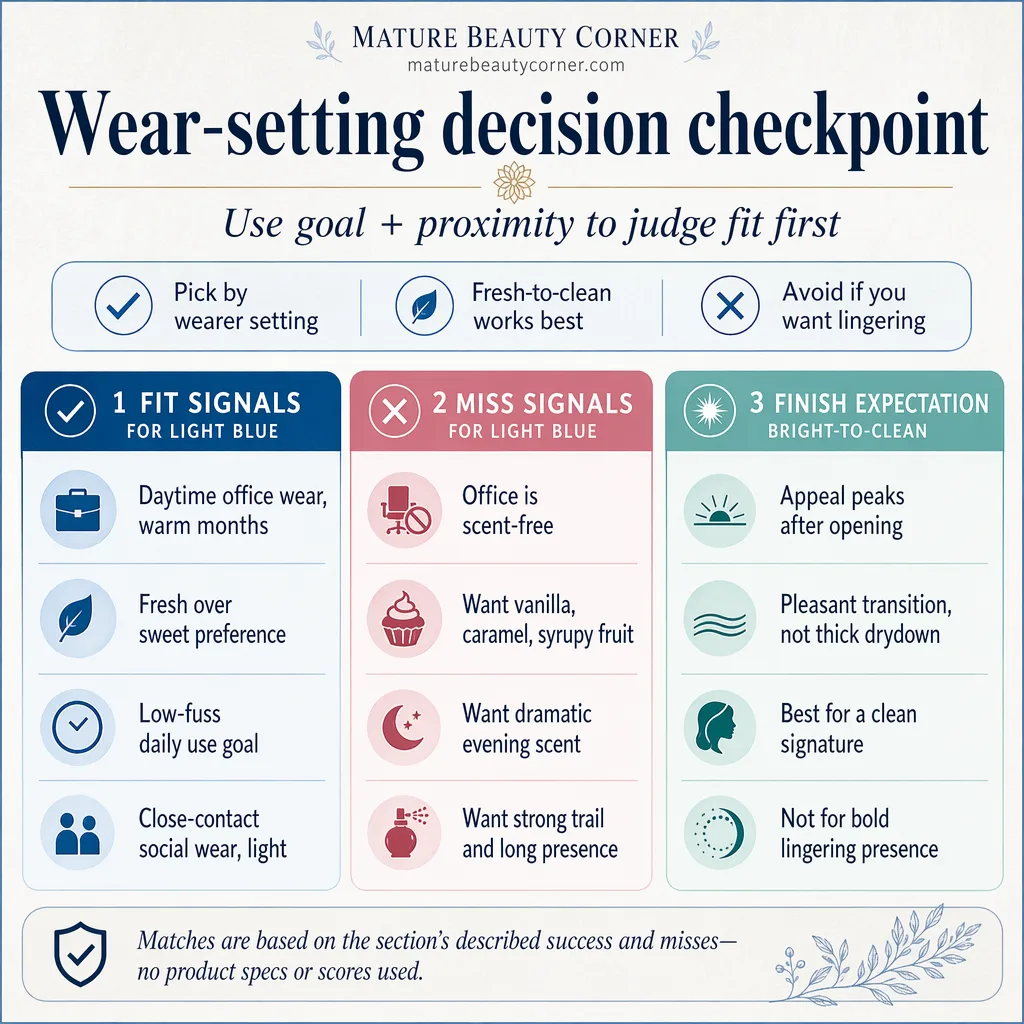
| Decision point | Light Blue fits | Light Blue misses |
|---|---|---|
| Daytime office wear | Yes, especially in warm months | Not if your office is scent-free |
| Fresh over sweet | Yes | No if you want vanilla, caramel, or syrupy fruit |
| Low-fuss daily use | Yes | No if you want a dramatic evening scent |
| Strong trail and long presence | No | Look for a richer perfume style |
| Close-contact social wear | Yes, with light spraying | No if you want a bold signature |
Most guides praise freshness as if that alone solves the buying decision. That is incomplete. Freshness only works when it stays pleasant after the opening, and Light Blue’s appeal sits in the bright-to-clean transition, not in a thick, lingering drydown.
The exact buyer path in this guide is Dolce & Gabbana Light Blue Eau de Toilette for Women, 1.7 oz (Amazon search) . Check the listing says for Women, Eau de Toilette, and 1.7 oz. Do not substitute Light Blue Intense, Summer Vibes, Pour Homme, or a gift set and assume the review still describes the same bottle.
Which Differences Matter Most
The scent profile is simple in the best sense. Light Blue opens with citrus and a green, crisp lift, then settles into airy florals and a musky, cedar-leaning base. The overall effect reads clean, lightly breezy, and restrained, not sugary or plush.
That matters because most citrus perfumes do not age well on the skin if the base gets thin or scratchy. Light Blue stays recognizable because the musky drydown keeps it from collapsing into generic lemon water. The trade-off is plain: the same brightness that makes it easy to wear also limits how full-bodied it feels.
For mature women, that balance matters more than trendiness. It works with tailored shirts, linen, denim, simple jewelry, and a polished daytime wardrobe. It looks out of place next to a perfume wardrobe built around vanilla, amber, incense, or soft dessert sweetness.
A premium upgrade path changes texture, not direction. A more expensive citrus from a luxury house gives a smoother transition and a less sporty finish, which matters if you want something quieter and more composed in close rooms. Light Blue keeps the edges brighter and simpler, which is the reason many people choose it and the reason others outgrow it.
The Compromise to Understand
Freshness and longevity pull against each other here. Light Blue keeps the top notes lively and the structure easy to read, which gives it clarity. The cost is obvious, it stays lighter and less enveloping than richer perfumes.
Most guides recommend adding extra sprays to fix that. That is wrong because more sprays make the citrus opening louder before they make the perfume more lasting. Once the top note gets pushed too hard, the scent feels sharper, not more elegant.
Use the scent with restraint.
- 1 spray: close office settings, cars, shared tables, scent-sensitive spaces
- 2 sprays: daytime lunches, errands, casual social plans
- Stop there: if you want the perfume to stay polished rather than noticeable from across the room
The right mindset is simple. Light Blue is a comfort fragrance for people who want to smell finished, not announced. That makes it a strong everyday choice and a weak match for anyone who wants perfume to carry the whole outfit.
Which Dolce Gabbana Light Blue Perfume Scenario Fits Best
This is the section that separates a casual like from a smart buy. Light Blue belongs in scenarios where crispness matters more than depth, and where the perfume needs to support the day rather than dominate it.
| Scenario | Fit | What to expect |
|---|---|---|
| Warm weekday office | Strong | Clean, neat, and non-sweet |
| Weekend errands and travel | Strong | Easy wear with low decision cost |
| Daytime brunch or lunch | Strong | Fresh enough for close company |
| Summer outdoors | Strong | Best setting for the citrus profile |
| Evening dinner | Weak | Too light for a richer mood |
| Cold-weather dressy wear | Limited | The brightness reads thinner against heavier fabrics |
| Scent-free workplace | Weak | Even a light opening announces itself at first |
For mature women, the best-fit scenario is a polished daytime life, not a dramatic evening calendar. The perfume works with tidy clothes, light makeup, and a preference for clean over decorative. It does not need to feel youthful to feel current, and that is part of its appeal.
Best-fit scenario box
- Warm weather and daytime plans
- Simple, refined wardrobes
- Low sweetness preference
- A desire for easy, polite fragrance
- A willingness to trade strength for ease
Maintenance and Upkeep Considerations
Treat Light Blue like a bottle you plan to rotate, not one you park in the bathroom. Heat, sunlight, and humidity flatten bright citrus first, so storage matters more than people admit. A drawer or closet shelf protects the opening better than a sunny vanity.
The upkeep trade-off is reapplication. Lighter fragrances ask for more attention through the day, especially if you want them to stay noticeable from morning to evening. If carrying a bottle or refreshing after lunch feels annoying, that annoyance belongs in the buying decision.
Buy the size you will finish, not the size that looks efficient. A larger bottle that sits unused loses its usefulness faster than a smaller bottle you actually reach for. That is especially true with bright citrus scents, because the top notes are the part people love first and notice aging first.
Constraints You Should Check
Confirm the exact version before buying. Light Blue has variations and flankers, and the name alone does not guarantee the same scent profile. A casual listing that skips the full name creates avoidable disappointment.
Sample on skin, not just on paper. Paper strips exaggerate the lemon brightness and hide how the scent settles into musk and woods. If the first 15 to 20 minutes feel too sharp or too plain on your skin, do not force the purchase.
The other constraint is your daily setting. If your routine includes long close-contact meetings, shared offices, or fragrance-sensitive people, a bright citrus opening carries more social weight than the bottle suggests. That is not a flaw for every wearer, but it is a real fit issue.
Who Should Look Elsewhere
Skip Light Blue if you want sweetness, creaminess, or a perfume that reads evening-ready without effort. It does not deliver amber depth, vanilla comfort, or a dense, lingering trail.
It also misses if you dislike a bright citrus opening. The first impression is crisp and noticeable, then it settles into a cleaner, quieter shape. If the opening feels too sharp, the rest of the wear will not rescue it.
Women who prefer a cold-weather signature should also look elsewhere. Against cashmere, wool, and darker evening clothes, Light Blue reads airy and thin rather than enveloping. That is the right effect for some wardrobes and the wrong effect for others.
Before You Buy
Use this as the last filter before you commit.
- You want fresh rather than sweet.
- You wear fragrance mostly in the daytime.
- You accept moderate presence over strong projection.
- You like citrus, clean musk, or airy florals.
- You plan to wear it in warm or mild weather.
- You are fine with 1 to 2 sprays, not a heavy cloud.
- You will sample on skin if citrus openings bother you.
If two or more of those bullets do not fit your routine, sample first and hold off on a blind buy. That is the cleaner decision, and it saves you from paying for a bottle that works against your wardrobe.
Common Mistakes to Avoid
Overspraying is the biggest mistake. More sprays do not turn Light Blue into a longer-lasting perfume, they turn it into a brighter and less refined one. The citrus opening gets louder before the fragrance gets deeper.
Expecting sweetness is the second mistake. Light Blue is not a dessert scent, and shopping for it as one guarantees disappointment. Its value sits in clean freshness, not in edible warmth.
Judging it only on a strip is another common misread. A strip captures the first impression and misses the part that makes or breaks the buy, the drydown. Give the skin test at least 15 to 20 minutes before deciding.
Using it for every occasion also creates regret. Light Blue fits daytime, mild weather, and easy social settings better than formal nights or heavy fabrics. One bottle does not need to do everything.
The Practical Answer
Buy Dolce & Gabbana Light Blue if you want a polished citrus-aquatic perfume for daytime wear and you accept a lighter trail. Sample first if you need sweetness, depth, or a scent that holds strong through an evening.
For mature women who prefer crisp over sweet, it earns its place as an easy, refined bottle. The fit is strongest when the occasion calls for freshness, the wardrobe stays simple, and the goal is to smell clean without turning perfume into the center of the room.
Frequently Asked Questions
Is Dolce & Gabbana Light Blue more fresh or sweet?
It is clearly more fresh. The opening leans citrus, the middle stays airy, and the drydown finishes on musk and woods rather than sugar or vanilla.
Is Light Blue a good perfume for mature women?
Yes, for mature women who want clean daytime freshness with a neat finish. It feels polished without trying too hard, but it loses appeal if you prefer richer, softer, or more dramatic perfume styles.
How many sprays should I use?
Start with 1 spray for close quarters and 2 sprays for daytime social settings. More than that pushes the opening louder without giving you a deeper, richer scent.
Does Light Blue work for evening wear?
It works poorly for most evening settings. The scent reads brighter and lighter than formal dinner wear usually needs, so it fits daytime and warm-weather use better.
Should I buy it blind or sample first?
Sample first if you dislike sharp citrus openings, need strong longevity, or plan to wear it in close indoor settings. A skin sample tells you more than the bottle name or a paper strip.
What is the biggest drawback?
The main drawback is the balance between freshness and staying power. The perfume smells easy and clean, but that same lightness keeps it from feeling deep or enduring.
Is it a good warm-weather perfume?
Yes. Warm air suits the bright citrus profile, and the scent reads cleaner in daylight than in cold, heavy weather.
What should I compare it against if I want something more upscale?
Compare it against a smoother luxury citrus from a premium house if you want a silkier drydown and a more composed finish. The upgrade is about texture and refinement, not about moving into a completely different scent family.
How long does Dolce & Gabbana Light Blue last?
Not as long as richer perfumes. The review’s main drawback is the balance between freshness and staying power: it smells easy and clean, but the same lightness keeps it from feeling deep or enduring. Sample first if you need strong longevity.
What does Dolce & Gabbana Light Blue smell like?
It opens with citrus and a green, crisp lift, then settles into airy florals and a musky, cedar-leaning base. The overall effect reads clean and lightly breezy, not sugary or plush.
See Also
If you want to move from general advice into actual product choices, start with Fragrance Layering Combo Picker for Mature Women, Perfume Bottle Size Picker Calculator for Mature Women, and What to Look for in a Fragrance Review Before Buying.
For a wider picture after the basics, Michael Kors Very Hollywood Perfume Review and Billie Eilish Perfume Review are the next places to read.