Side-by-side comparison
| Topic | Fragrance de parfum | Eau de parfum |
|---|---|---|
| Scent profile | Denser opening, fuller middle, richer trail | Polished presence with less pressure |
| Daily settings | Formal nights, colder weather, statement wear | Work, errands, lunch, dinner, shared spaces |
| Social footprint | Carries farther and can feel forceful up close | Stays more contained and easier in close conversation |
| Upkeep | Fewer sprays, but restraint matters more | May need reapplication or a travel atomizer |
| Fabric behavior | Clings to scarves and coat linings | Leaves less lingering burden on clothing |
The core trade-off is intensity versus adaptability. Fragrance de parfum gives the more enveloping, deliberate scent experience, but that depth also makes it harder to wear casually or in tight spaces. Eau de parfum keeps the polished feel while staying easier to live with across a full day, which is why it works better for mixed schedules and mature wardrobes that need elegance without extra management.
Fragrance de parfum suits shoppers building a smaller, more intentional scent wardrobe, especially for evenings, colder months, and occasions where a richer trail feels appropriate. Eau de parfum suits buyers who want one dependable bottle for work, errands, lunch, and dinner, with less concern about overwhelming a room or carrying scent on fabric into the next day.
Eau de parfum is the better buy for most readers, and eau de parfum beats fragrance de parfum on wearability, flexibility, and day-to-night usefulness. If your only goal is the richest, most deliberate concentration for evening wear, fragrance de parfum takes the lead. If your calendar includes work, errands, shared cars, and dinner plans in the same week, eau de parfum stays the cleaner choice.
Quick Verdict
Eau de parfum wins for the common use case because it gives enough presence without asking for special handling. That matters more than raw strength, especially for mature wardrobes that benefit from polish, not perfume that announces itself before you do.
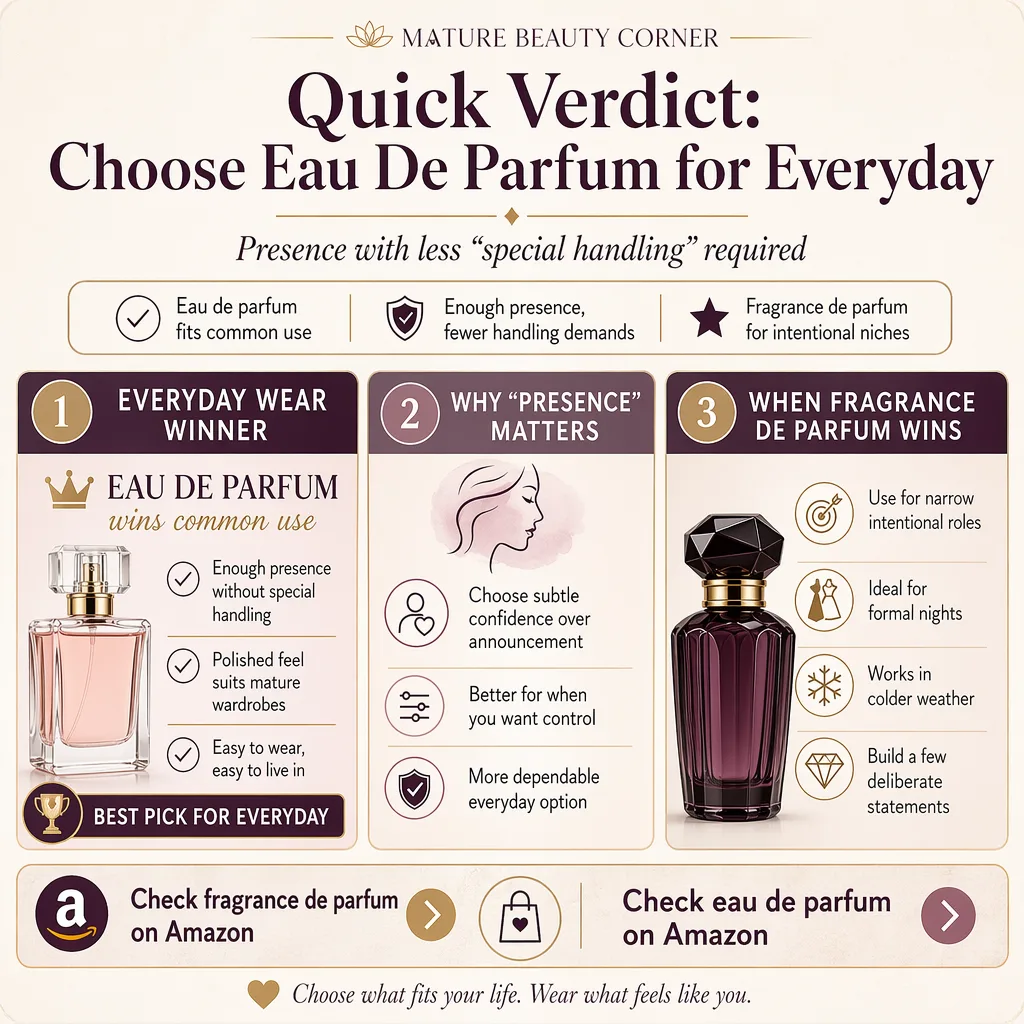
Fragrance de parfum wins only when the bottle serves a narrow, intentional role. Think formal nights, colder weather, or a scent wardrobe built around a few deliberate statements rather than one dependable everyday option.
What Separates Them
Most shoppers assume the stronger concentration is automatically the premium choice. That is wrong. Concentration changes social footprint as much as it changes longevity, and that difference matters more than the label on the box.
fragrance de parfum brings more density and a richer trail. eau de parfum brings the same general polish with less pressure to wear it a certain way. The real decision is not about luxury versus budget, it is about how much scent management you want in the rest of your day.
Everyday Usability
fragrance de parfum
Fragrance de parfum rewards a light hand. One careful application fits dinner, a theater night, or a cold afternoon under a coat. The trade-off is control, because the same depth that feels elegant in a formal setting reads too forceful in a car, a small office, or a close conversation.
It also asks more from the wearer’s schedule. A dense scent becomes a choice, not a background detail, and that creates social friction when the day includes mixed settings.
eau de parfum
Eau de parfum fits more of the day without demanding a costume change in mood. It works for errands, lunch, work, and later plans because it carries presence without taking over the room. For mature women who want a scent that reads polished rather than loud, that is the more forgiving shape.
The drawback is straightforward, it gives up some of the dramatic richness and staying power that a deeper concentration delivers. If you want the bottle to feel like evening jewelry, eau de parfum lands a little lighter.
Where One Goes Further
Fragrance de parfum wins on depth. It gives a fuller opening, a more enveloping middle, and a feeling of scent as a deliberate accessory rather than an afterthought. It also asks for less reapplication, which sounds convenient until the scent is too much for the setting.
Eau de parfum wins on adaptability. It layers more easily over unscented lotion, suits a capsule wardrobe, and stays comfortable across a broader range of temperatures and social settings. The limit is reach, since it rarely delivers the same dense, formal impression that fragrance de parfum creates.
Which One Fits Which Situation
Maintenance and Upkeep Considerations
The upkeep difference is not mechanical, it is behavioral. Fragrance de parfum demands restraint, because one careless spray lingers on fabric, in a hallway, and on anyone standing close by. It also clings to scarves and coat linings, which sounds elegant until you want a different scent the next day.
Eau de parfum carries less of that lingering burden, but it shifts responsibility to reapplication. If you want the scent to last through a long afternoon or into evening, a travel size or small atomizer becomes part of the routine. That extra step is still easier than managing an overly dense scent all day.
Constraints to Confirm for This Matchup
The label on the retailer page does not tell the whole story. Some listings use the word fragrance loosely, while the actual concentration tier decides how the scent behaves on skin and fabric. Check the box, the ingredient list, and the concentration wording before buying.
Climate matters more than most guides admit. Warm skin and warm weather push a scent outward, while dry skin and air conditioning shorten the impression. A bottle that feels refined in winter outerwear can read much louder in July, especially in close spaces.
Sample size or a generous return policy matters here more than in many beauty purchases. Scent is personal, and the wrong concentration creates annoyance before it creates regret. That is a practical buying check, not a luxury extra.
Who Should Look Elsewhere
Skip fragrance de parfum if you want a scent that fades into the background of a full day. It does the opposite. It rewards presence, and that works against anyone who prefers an invisible finish, a scent-free workplace, or a fragrance that never demands attention.
Skip eau de parfum if you want the densest, most deliberate perfume statement and you know you will wear it on purpose. It also misses for buyers who expect one bottle to act as a formal accessory. If you want a softer option than either, look at eau de toilette instead of forcing this choice.
Value for Money
Eau de parfum gives the broader return because one bottle fits more occasions. That makes it the better value for most shoppers, especially anyone building a fragrance wardrobe slowly and wanting the bottle to work hard across the week. The lower spend also goes further because there is less risk of owning a scent that only suits one mood.
Fragrance de parfum makes sense when you know the bottle will see regular evening use. It pays off through concentration and presence, not through flexibility. The cheaper alternative here is eau de parfum, and it is the smarter first purchase for most buyers.
The Practical Takeaway
Comfort wins the broader use case, and eau de parfum delivers it. Performance wins the reserved, statement-heavy use case, and fragrance de parfum delivers that. The better bottle is the one you wear without negotiating with the room first.
For mature women, that usually means choosing the scent that feels elegant at lunch, polite at a desk, and still composed at dinner. Eau de parfum fits that life better. Fragrance de parfum fits a more selective fragrance wardrobe.
Final Verdict
Buy eau de parfum for the most common use case, a polished scent that works for work, errands, lunch, and dinner without special handling. Buy fragrance de parfum only if your fragrance life is intentionally smaller, richer, and more evening-focused. For most readers, eau de parfum is the better fit.
Frequently Asked Questions
Is fragrance de parfum stronger than eau de parfum?
Yes. Fragrance de parfum carries a denser concentration and delivers a richer scent impression than eau de parfum.
Which one lasts longer on skin?
Fragrance de parfum usually lasts longer because it holds more scent material and stays more persistent through the day.
Which one works better for office wear?
Eau de parfum works better for office wear because it keeps presence without crowding the room or dominating close conversations.
Is fragrance de parfum better for winter?
Yes. The richer concentration pairs well with coats, scarves, and colder air, where a deeper scent reads more naturally.
Which one is the safer first purchase?
Eau de parfum is the safer first purchase because it fits more situations, asks less of the wearer, and creates fewer regrets in shared spaces.
See Also
If you are still weighing both sides of this matchup, keep going with Warm Perfume vs Clean Perfume: How to Pick the Right Scent Mood, Fresh Scent vs Floral Scent Perfume: How to Choose Your Atelier Style, and Light Fragrance vs. Long-Lasting Fragrance for Older Women: Which Scent Fits Your Day?.
To widen the decision beyond this head-to-head, Elizabeth Arden Red Door Perfume Review: What You Need to Know Before You Buy and Billie Eilish Perfume Review provide the broader context.