Side-by-side comparison
| Topic | Makeup Sponge | Foundation Brush |
|---|---|---|
| Finish on mature skin | Softens the base and keeps texture quieter around fine lines, pores, and dry patches | Places product more deliberately, which can leave stroke marks if the formula sets quickly |
| Application style | Works by bouncing and tapping foundation into the skin for a fused look | Works by placing and moving foundation across larger areas with more direct control |
| Coverage and speed | Slower, with more blending steps and a more diffused result | Faster for covering the face and building stronger coverage |
| Product use | Absorbs some foundation, so more product stays in the tool | Keeps more foundation on the skin, so less is wasted |
| Prep and cleanup | Needs wetting before use and more immediate care after washing | Skips damp prep and dries faster after washing, though bristles still need regular cleaning |
| Formula pairing | Reads especially well with liquid and cream bases that need softening | Handles liquid and cream bases well when the goal is efficient placement |
The main trade-off is diffusion versus efficiency. A makeup sponge (Amazon search) blurs the base into the skin and is gentler on visible texture, which is why it reads better in daylight on mature skin. A foundation brush (Amazon search) is more assertive: it moves foundation faster, wastes less product, and gives more coverage control, but it can expose strokes on dry or fast-setting areas.
Choose the sponge if your priority is a softer, more blended finish with liquid or cream foundation and you do not mind the damp-tool routine. Choose the brush if you want a quicker morning application, stronger placement, and less product loss, especially when your base needs to cover larger areas cleanly.
The makeup sponge wins for most mature-skin foundation routines because it softens the edge of the base and keeps texture quieter in daylight. That call changes when speed, stronger coverage, or lower product waste matter more, because the foundation brush handles those jobs better. For a natural liquid or cream finish, makeup sponge fits better; for a faster, more efficient application, foundation brush earns the nod.
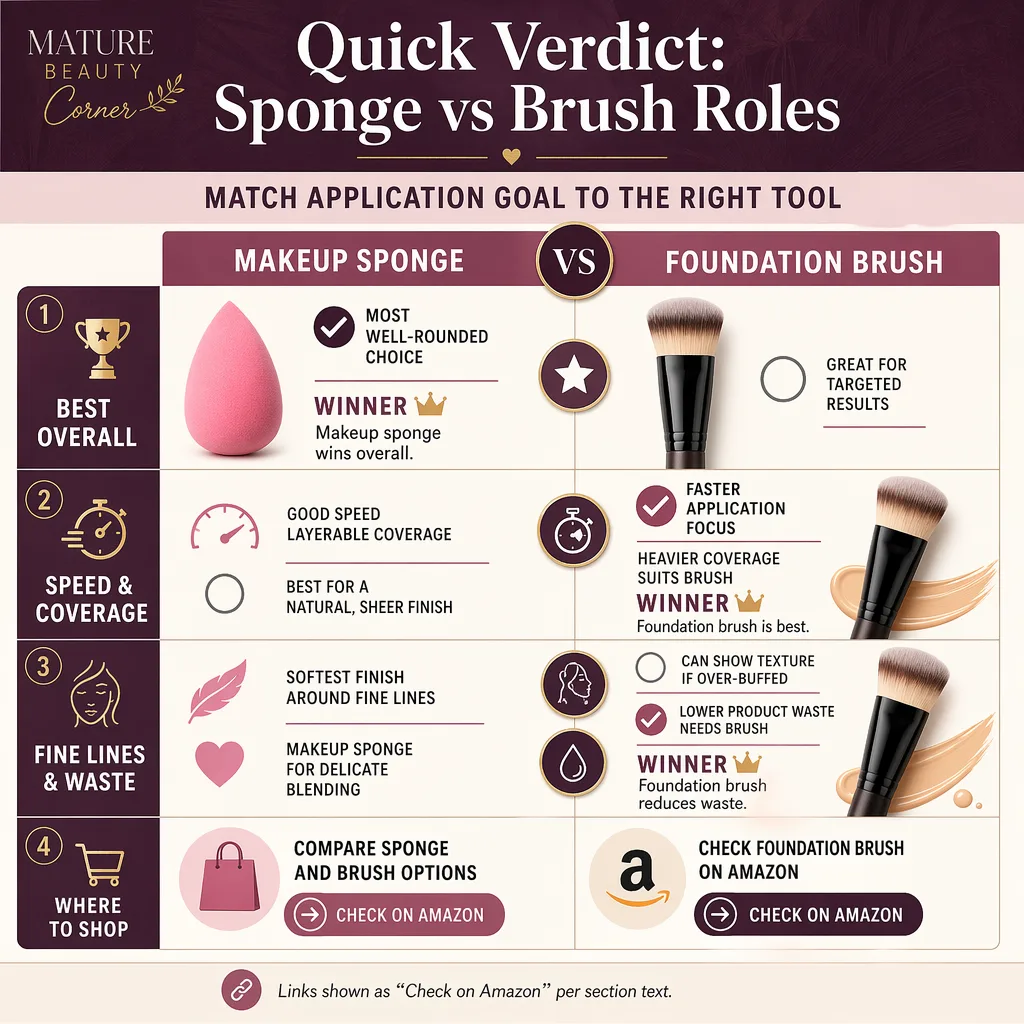
Quick Verdict
The exact comparison is BEAKEY’s five-piece sponge set versus the single KESHIMA flat-top kabuki brush . The set lowers the cost per clean sponge; the brush is the longer-lived tool if you wash it without soaking the ferrule.
Best overall: makeup sponge
Best for speed and heavier coverage: foundation brush
Best for the softest finish around fine lines: makeup sponge
Best for lower product waste: foundation brush
What Separates Them
The real split is not natural versus full coverage. It is diffusion versus placement. A sponge bounces foundation into the skin, which softens borders around pores, smile lines, and the outer cheek area where texture shows first.
A brush places product more deliberately, which gives control and speed but leaves more evidence of the stroke unless the formula is especially forgiving. Most guides treat the brush as the more professional choice. That is wrong on mature skin, because professional here means an even, believable finish, not a sharper line.
The makeup sponge is the quieter tool, while the foundation brush is the more assertive one. A premium dense buffing brush narrows the gap on streaking, but it still does not match the soft edge of a damp sponge on dry or textured areas.
Everyday Usability
A sponge asks for wetting, squeezing, and a little more ritual before the first dab of foundation. That extra step matters on rushed mornings, but it also gives the tool its forgiving finish. A brush skips the damp prep and dries faster after washing, which lowers annoyance if the vanity space is tight.
The downside is control drift. A brush that looks polished at the start exposes streaks fast when the hand presses too hard or the base sets quickly. A sponge asks for more patience, but it rewards that patience with a finish that reads smoother across conversation distance and in daylight.
For daily wearability on mature skin, the sponge wins. For speed and a less fussy setup, the brush wins.
Where One Goes Further
The sponge goes further with bases that need softening. It handles the edges of concealer, liquid blush, and cream foundation without making the face look patched or built up around lines. The trade-off is absorption, because part of the product ends up in the tool instead of on the skin.
The foundation brush goes further with coverage control. It places foundation more deliberately across larger areas and keeps more of the formula on the face, which matters when the base itself carries the expense. The trade-off is visible toolwork, especially with quick-setting formulas or dry patches.
A dense premium buffer improves the brush path, but it does not remove the need for better prep. The sponge keeps the lead on finish, while the brush keeps the lead on efficiency.
Nuanced Trade-Offs: Makeup Sponge vs Foundation Brush
Best-fit box: makeup sponge for the mature-skin routine that values softness first. foundation brush for the base that needs speed and stronger coverage control.
This matchup is not about which tool looks more polished on a vanity tray. It is about how the finish reads when the face is close, lit naturally, and seen through the day. The sponge wins the social-wearability test because it keeps the base quieter. The brush wins when coverage has to look deliberate from across a room.
Maintenance and Upkeep Considerations
The sponge is the fussier tool. It needs a full rinse, complete dry time, and a clean place to rest, or it turns from soft-finish helper into a residue trap. That hidden cost matters because the tool itself looks small and simple.
The brush is easier to store and faster to dry, but it needs regular washing to pull foundation out from the base of the bristles. Most shoppers assume a sponge is lower maintenance because it is smaller. That is wrong, because a damp sponge demands more immediate care even if it takes less drawer space.
Winner: foundation brush for lower upkeep burden. The sponge wins only when softness matters more than routine friction.
Published Details Worth Checking
The label foundation brush hides more than it reveals. Shape changes the result more than branding does, and that is the first thing to verify before buying.
- Brush shape: flat, domed, angled, or dense buffer. Each one behaves differently on the face.
- Bristle material: synthetic bristles suit liquid and cream foundation better than mixed or loose heads.
- Head density: dense brushes place more product, looser brushes sheer it out.
- Sponge firmness: a softer sponge diffuses more, while a firmer sponge places foundation with a little more control.
- Edge design: pointed tips reach around the nose and under the eye, rounded heads move faster across cheeks and forehead.
Common mistakes shoppers make
- Buying a brush and expecting sponge-like diffusion.
- Buying a sponge and expecting no cleanup burden.
- Ignoring brush shape and treating all foundation brushes as the same tool.
- Using a damp sponge with a fast-setting base and blaming the tool for patchiness.
- Choosing the tool before deciding whether the foundation itself is sheer, medium, or full coverage.
The useful detail is not the generic name. It is the geometry, density, and how the tool handles your actual base.
When Another Option Makes More Sense
Skip the sponge if you want the fastest possible base, dislike wet tools, or use a foundation that sets before you finish blending. Skip the brush if your priority is the softest daytime finish or your foundation clings to dry patches and texture.
The brush makes more sense for a quick, tidy routine with liquid or cream foundation. The sponge makes more sense for a softer result on skin that shows fine lines, dryness, or visible blending marks. If your routine is mostly spot concealer and skin tint, neither tool deserves much space in the drawer.
This is the point where a lot of shoppers overbuy. A mature routine does not need extra hardware unless the finish improves in daylight.
Value by Use Case
The cheapest tool at checkout does not stay the cheapest if it absorbs more foundation every morning. That is where the foundation brush pulls ahead for regular wear. It keeps more of the product on the face, dries faster, and asks less of the daily routine.
The makeup sponge wins entry value and finish value. It starts simple, works well with soft-focus makeup, and suits anyone who wants a gentler look without learning brush pressure. The trade-off is a tighter cleaning routine and more product loss over time.
For frequent foundation wear, the brush wins on value. For occasional use or a softer finish-first routine, the sponge wins.
- Choose makeup sponge if your skin shows dryness, texture, or fine lines, and you want the base to look fused rather than placed.
- Choose foundation brush if speed, coverage control, and lower product waste matter more than a diffused edge.
- Choose the sponge if your main goal is a polished daylight finish.
- Choose the brush if your main goal is to move foundation across the face fast.
The common mistake is buying for coverage first and finish second. On mature skin, finish decides how the makeup reads after the first hour, not just at application.
Final Verdict
Buy makeup sponge (Amazon search) for the most common use case, liquid or cream foundation that needs a softer, more flattering finish on mature skin. Buy foundation brush if your routine prizes speed, product efficiency, or stronger coverage control.
For one default choice, the makeup sponge fits better.
FAQ
Is a makeup sponge better than a foundation brush for mature skin?
Yes. The sponge gives a softer finish and reduces the look of application lines on dry or textured skin. The brush wins only when speed and coverage matter more than softness.
Does a foundation brush waste less product?
Yes. A brush keeps more foundation on the skin and less in the tool. That matters most with daily full-face makeup or richer formulas.
Which tool is faster in the morning?
The foundation brush is faster if the formula spreads easily. The sponge takes extra setup because it works best damp and needs more tapping to blend evenly.
Which tool is easier to keep clean?
The brush is easier to store and dries faster. The sponge needs more immediate care, and skipped cleaning shows up quickly as residue and odor.
Can a sponge replace a foundation brush completely?
No. The sponge handles soft blending better, but the brush handles placement, heavier coverage, and faster application more cleanly.
Which one looks better in daylight?
The makeup sponge does. It keeps the finish quieter and more blended, which matters when the face is seen up close in natural light.
What should I buy first if I only want one tool?
Buy the makeup sponge (Amazon search) first if your skin leans dry, textured, or line-prone. Buy the foundation brush first if you wear fuller coverage and want the quickest routine.
Upkeep and what to check
A damp sponge has the heavier upkeep: it needs a wash, a full dry and a clean resting place, and left damp in a pouch it becomes a hygiene chore. A brush is easier to spot-clean and dry. Check brush density and softness and whether the head is synthetic, and check a sponge’s shape and bounce. A sponge points to a softer finish and a brush to speed; choose the tool that lowers correction later in the day.
See Also
If you are still weighing both sides of this matchup, keep going with Perricone MD No Makeup Foundation vs Estée Lauder Futurist Hydra Rescue, Estée Lauder Double Wear vs Clinique Even Better Foundation, and Fragrance Mist vs Eau De Parfum: Which One Fits Better?.
To widen the decision beyond this head-to-head, Burberry Her London Dream Perfume Review and Billie Eilish Perfume Review provide the broader context.