Side-by-side comparison
| Topic | Micellar Water | Makeup Remover |
|---|---|---|
| Makeup load | Lifts light makeup and daytime grime | Breaks down mascara, liner, foundation, and lipstick |
| Eye-area effort | Works with a quick cotton-pad sweep | Cleans in fewer passes with less repeated rubbing |
| Routine style | Fits no-rinse, quick reset routines | Fits a dedicated first step before cleanser |
| Product formats | Usually a simple cleansing liquid | Includes oils, balms, bi-phase liquids, creams, and wipes |
| Cleanup burden | Needs pads and can leave a slip that some skin needs a follow-up cleanse for | Often needs a second cleanser, but finishes stubborn makeup faster |
| Travel and touch-ups | Easy for travel bags and midday refreshes | Better when strong nighttime removal is the priority |
The main trade-off is simplicity versus removal power. Micellar water keeps the routine light and fast, but it stops short on makeup that is built to stay in place. Makeup remover asks for a little more product awareness, yet it does the harder job with fewer swipes, which matters around mature eyes where repeated rubbing shows up quickly.
Micellar water suits low-makeup days, travel kits, and quick refreshes when you want a no-rinse step. Makeup remover suits regular evening cleansing, especially if mascara, liner, long-wear base, or transfer-proof lipstick are part of the routine. For most readers, the stronger remover earns the main shelf spot, while micellar water stays useful as the lighter backup.
Makeup remover wins for most readers because it clears mascara, foundation, and sunscreen with less rubbing than micellar water . For mature eyes, fewer passes matter more than the gentlest-sounding label. Micellar water takes the lead only when the routine stays light, the skin wants a no-rinse finish, or the bottle lives in a travel bag. If you wear waterproof eye makeup or long-wear base, makeup remover stays the safer buy.
Quick Verdict
Winner: makeup remover. It does the harder job with fewer swipes, and that matters around the eyes where tugging shows up fast.
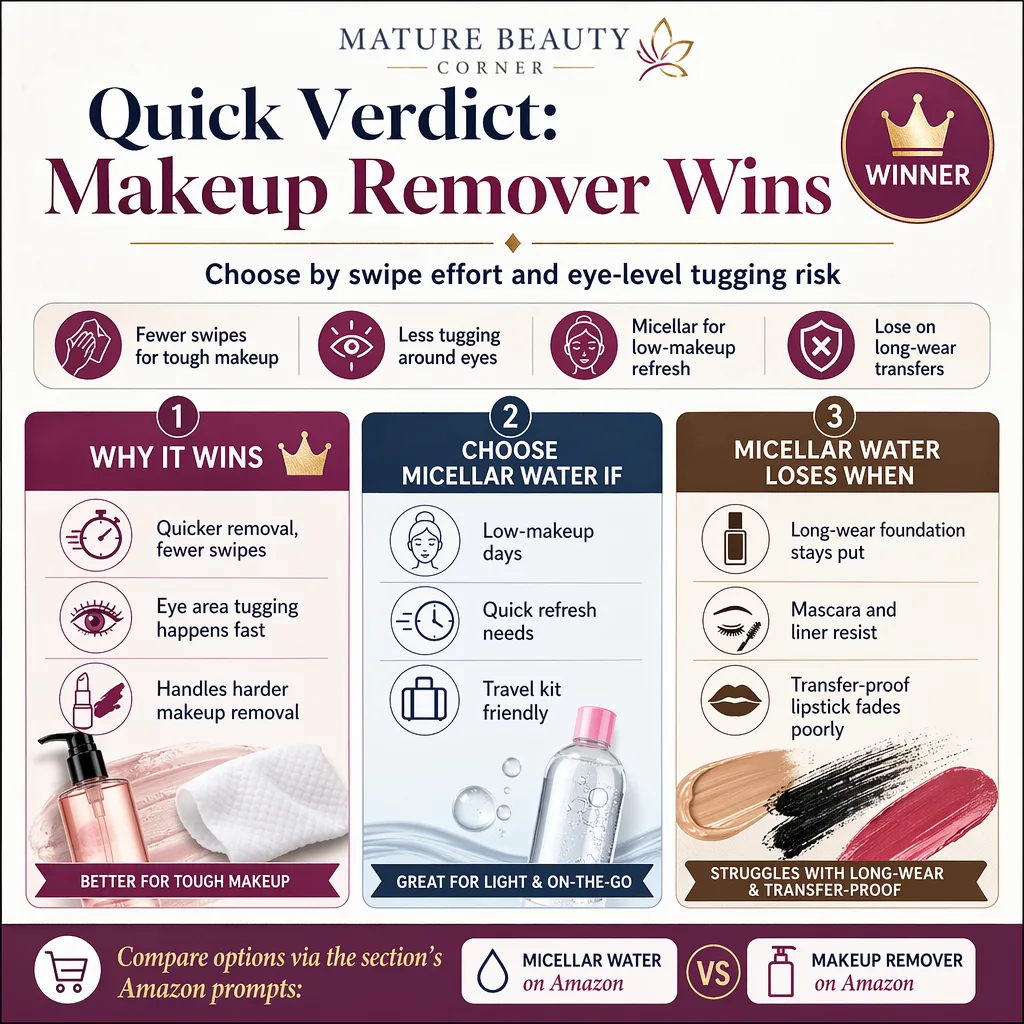
Micellar water fits low-makeup days, quick refreshes, and travel kits. It loses when the face carries long-wear foundation, mascara, liner, or transfer-proof lipstick.
What Separates Them
Most guides treat micellar water as a full replacement for makeup remover. That is wrong because micellar water is a light cleansing liquid, while makeup remover is built to dissolve makeup first, then leave the rest of the cleanup to the next step.
The practical split is simple. micellar water suits a quick cotton-pad sweep and a no-rinse routine. makeup remover suits the end-of-day task of breaking down stubborn pigment without repeated rubbing.
The category names hide an important difference in burden. Micellar water works like a gentle reset. Makeup remover works like a targeted tool. For mature skin, the second option wins because the comfort problem is not just texture, it is friction.
Everyday Usability
Micellar water feels easy because it is easy. One pad handles light makeup and a little daytime grime, and the routine ends quickly on bare-skin days. The trade-off is the residue-like slip that lingers on some skin unless you follow with a cleanser.
Makeup remover asks for a little more product knowledge, but the right formula shortens the eye-area cleanup and reduces repeat swiping. That matters when lashes are sparse, liner sits close to the lash base, or the under-eye area does not like being chased with a cotton round. Everyday winner: makeup remover for actual removal, micellar water for touch-ups and minimalist mornings.
Feature Depth
Micellar water has a narrow job description, and that is part of its appeal. It refreshes, loosens light makeup, and fits as a first cleanse. It stops short on waterproof mascara and long-wear lip color, so the category ends before the hard jobs do.
Makeup remover has deeper capability because the category covers oils, balms, bi-phase liquids, creams, and wipes. That range is a strength and a shopping burden. Most guides recommend a wipe or any liquid remover as interchangeable, but that is wrong because wipes sit at the weakest end of the category and the formula matters far more than the label. Feature winner: makeup remover.
Scenario Matrix
For readers comparing micellar water and makeup remover , the right answer changes with makeup load and how much cleanup the night routine tolerates.
The pattern stays consistent. Micellar water wins when the routine is minimal. Makeup remover wins when the makeup is not. For most daily evening routines, the stronger tool earns the shelf space.
How This Matchup Fits the Routine
The cleanest routine puts makeup remover first and cleanser second. Micellar water sits in the middle, either as a quick pre-cleanse or as the entire removal step on very light makeup days. If bedtime already feels crowded, the bottle that finishes the eye area in fewer passes is the one that earns its place.
For mature women, this is less about trend and more about annoyance cost. Repeated swiping around the eyes leaves skin looking irritated and makes the process feel longer than it should. The better fit is the product that shortens the part of the routine people want done fastest, which points to makeup remover on most nights and micellar water on lighter ones.
Maintenance and Upkeep Considerations
Micellar water looks simpler because it stores as one bottle and works with cotton rounds or reusable pads. The hidden burden is the pad habit, which adds waste or laundry to every removal session. If you dislike extra cleanup, that matters.
Makeup remover, especially in balm or oil form, asks for more attention to closure, sink access, or a follow-up cleanser. The trade-off is fewer swipes and less physical effort around the eyes. Upkeep winner: micellar water for the vanity, makeup remover for the face.
Constraints You Should Check
The category name does not tell the whole story. The formula details matter more than the bottle label.
- Choose fragrance-free if your eyes sting easily.
- Confirm waterproof makeup removal if mascara or liner stays put all day.
- Check for no-rinse instructions if you want micellar water as a final step.
- Look for oil, balm, or bi-phase formats if you want stronger remover performance.
- Prefer a secure cap or pump if the bottle travels in a tote.
Micellar water wins the simplicity test because the formula map is narrower. Makeup remover asks for more label reading, especially if scent sensitivity sits high on the list. Constraint edge: micellar water.
Who This Is Wrong For
Micellar water is wrong for a full face that includes waterproof mascara, long-wear lipstick, or a sunscreen layer that refuses to move. It also disappoints if you want one bottle to end the routine cleanly without a second cleanser.
Makeup remover is wrong for readers who want the lightest possible morning reset or who dislike richer textures near the eyes. Heavy fragrance belongs nowhere near this job, so a scented remover or scented micellar water loses fast for sensitive skin. Wrong-fit take: micellar water fails heavier makeup, and makeup remover fails the pure no-friction crowd.
Value for Money
The cheapest-looking choice is not the best value if it forces repeat swiping. Micellar water is good value for light makeup and quick touch-ups, because the bottle does not need to work very hard to earn its keep.
Once the makeup gets stubborn, the value equation shifts. A dedicated makeup remover buys back time, reduces tugging, and usually does the first-pass job better. A plain bottle of micellar water plus cotton rounds looks frugal at checkout, but the extra pads and the extra cleanser cut into that advantage. Value winner: makeup remover for regular makeup wear, micellar water for the lightest routines.
The Practical Takeaway
Buy makeup remover if you remove mascara, liner, foundation, or lipstick most nights. Buy micellar water if your makeup stays light, you want a no-rinse bottle on the counter, or you use it as a quick first cleanse.
For mature skin, the best choice is the one that lowers rubbing around the eyes and finishes the job in the fewest passes. That rule points to makeup remover for the main routine and micellar water for the lighter backup role.
Final Verdict
Makeup remover fits better for the most common use case. It handles the makeup people actually need to take off at night, and it protects the eye area by reducing repeated swipes.
Micellar water still earns a place for travel, touch-ups, and light makeup days. It works best as the simpler supporting bottle, not the main act. If your routine stays minimal, choose micellar water. If your makeup stays put, choose makeup remover.
Frequently Asked Questions
Is micellar water enough to remove makeup?
No. It handles light makeup and a first pass, but waterproof mascara, long-wear foundation, and transfer-proof lipstick need a stronger remover.
Do you rinse after micellar water?
A rinse or second cleanser belongs in most evening routines, especially after a full face. If the label says no-rinse, that describes the formula, not the level of cleanup your skin needs.
Which is gentler around mature eyes?
The gentlest result comes from the product that removes makeup in the fewest swipes. That is usually a makeup remover with the right texture for the job.
Can makeup remover replace cleanser?
No. It removes makeup and sunscreen residue first, then cleanser finishes the job.
What format of makeup remover works best?
Bi-phase liquids, oils, and balms handle stubborn makeup better than wipes. Wipes belong in the backup bag, not as the main nightly plan.
Which is better for travel?
Micellar water wins for simple travel cleanup. Makeup remover wins only when you pack heavy eye makeup and need stronger removal at the destination.
See Also
If you are still weighing both sides of this matchup, keep going with Warm Perfume vs Clean Perfume: How to Pick the Right Scent Mood, Fresh Scent vs Floral Scent Perfume: How to Choose Your Atelier Style, and Borghese Makeup vs Clinique Makeup for Mature Skin: Which Works Better.
To widen the decision beyond this head-to-head, Prada Candy Perfume Review: What to Know Before You Buy and Billie Eilish Perfume Review provide the broader context.